Every business starts in founder mode.
You do everything.
You decide everything.
You are the strategy and the execution.
You’re writing blog posts and scrubbing toilets. You’re selling the vision while also keeping the lights on. You’re both the manager and the employee — a necessary catch-22 in the early days of any company.
Founder mode isn’t a flaw. It’s an asset.
But it’s also temporary.
The problem is that most founders don’t realize there is a transition. They just keep operating the same way as the business grows — until that operating mode becomes a risk.
When Founder Mode Stops Working
As the business grows, complexity grows with it. More customers. More decisions. More tradeoffs. More people.
And that’s when a specific failure mode appears:
Decisions start getting delayed.
Not all decisions — specific ones:
-
Delegation and process decisions
-
Roadmap tradeoffs
-
Saying no to opportunities
These aren’t urgent in the moment, so they slide. But over time, the cost compounds.
The founder gets overloaded.
Decision fatigue sets in.
And eventually, the team starts waiting.
The Signal Most Founders Ignore
Here’s the clearest indicator that founder mode has become a liability:
Your team consistently waits for your approval before moving forward.
This isn’t about bad hires.
It’s not a motivation problem.
It’s not solved by adding more headcount.
It’s a structural signal.
When every meaningful decision still routes through the founder, the founder has become the bottleneck — even if they’re working nonstop.
Why Hiring More People Doesn’t Fix This
A common reaction at this stage is to hire.
But if the founder hasn’t shifted modes, hiring actually increases risk.
More people just means:
-
more decisions waiting in line
-
higher burn
-
slower execution
-
increased dependency on the founder
The system hasn’t changed. It’s just more expensive now.
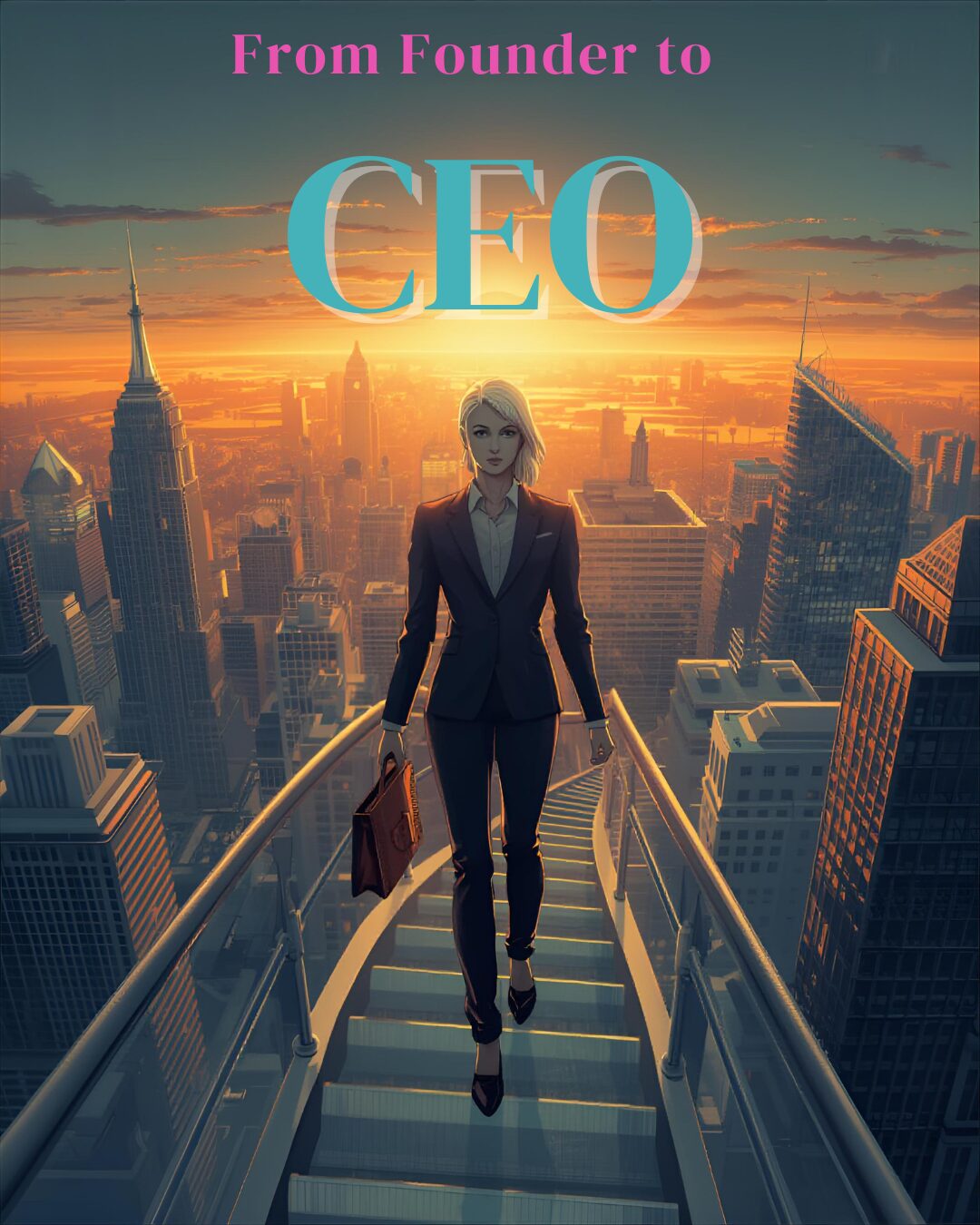
The Real Founder → CEO Transition
Most advice frames this transition as “delegating more work.”
That misses the point.
The real transition is delegating decisions.
Founder mode is about doing.
CEO mode is about decision distribution.
As long as the founder remains the default decision-maker, the business cannot scale safely.
This is why founder burnout isn’t a personal problem — it’s a business survivability problem.
Founders often say they stay in control to protect their sanity.
In reality, holding onto control for too long is what puts everything at risk.
The Pipeline, Not the Personality Shift
This transition isn’t about mindset, confidence, or letting go emotionally.
It’s a pipeline.
Founder mode is necessary early.
CEO mode is necessary later.
The danger comes from staying in the wrong mode for too long.
The longer a founder holds onto decisions:
-
the more decision fatigue increases
-
the more execution slows
-
the more the business depends on one human system
That’s not resilience. That’s fragility.
What to Notice Right Now
You don’t need to “fix” this today.
You just need to notice.
Ask yourself one question:
If I disappeared for two weeks, what decisions would stop the business from moving forward?
If the answer is “most of them,” that’s not a failure.
It’s a signal that you’re still operating in founder mode — even though the business is asking for a CEO.
The Next Step
If you’re seeing this pattern, the goal isn’t to do less work.
It’s to understand where your attention and decisions are creating risk.
That’s exactly what the Focus Filter is designed to help with.
It’s a lightweight way to identify:
-
which decisions actually require you
-
which ones don’t
-
and where holding control is quietly threatening momentum and survivability
Founder mode built the business.
CEO mode is what allows it to last.





Leave a Reply